1. Give you one view
The file gets copied. One version lives on the network drive, one in a mailbox thread, one on an analyst's desktop, and each is slightly different. The consolidated view the CISO needs means merging files by hand the night before the committee. Nobody fully trusts the result, starting with the person presenting it.
2. Remember who changed what
A cell can change without a trace. When the auditor asks who lowered this risk from high to medium, on what date and with what justification, the honest answer is that the file does not know. No trail, no timestamps, no attribution: nothing an auditor accepts as evidence, and nothing a manager can rely on when accountability is personal.
3. Watch your suppliers
A supplier is assessed once, at onboarding. The questionnaire is filed and the vendor becomes invisible for the life of the contract, while the dependency on them quietly deepens. A spreadsheet cannot chase an overdue reassessment, and it cannot tell you which of your critical vendors has not been reviewed in two years. At a time when ENISA's Threat Landscape 2024 singles out supply-chain compromise as a horizontal threat, that silence is a risk in itself.
4. Warn you before the deadline does
A spreadsheet is passive. It does not alert the owner whose risk review was due last month. It does not flag the exception that expired quietly in March. It does not surface regulatory drift before the audit finds it. Compliance stays reactive: gaps are discovered after the fact, framework by framework, each one managed separately.
How SynapseRM answers all four
These four failures are not user errors. They are structural properties of the tool, and fixing them is exactly what a platform is for:
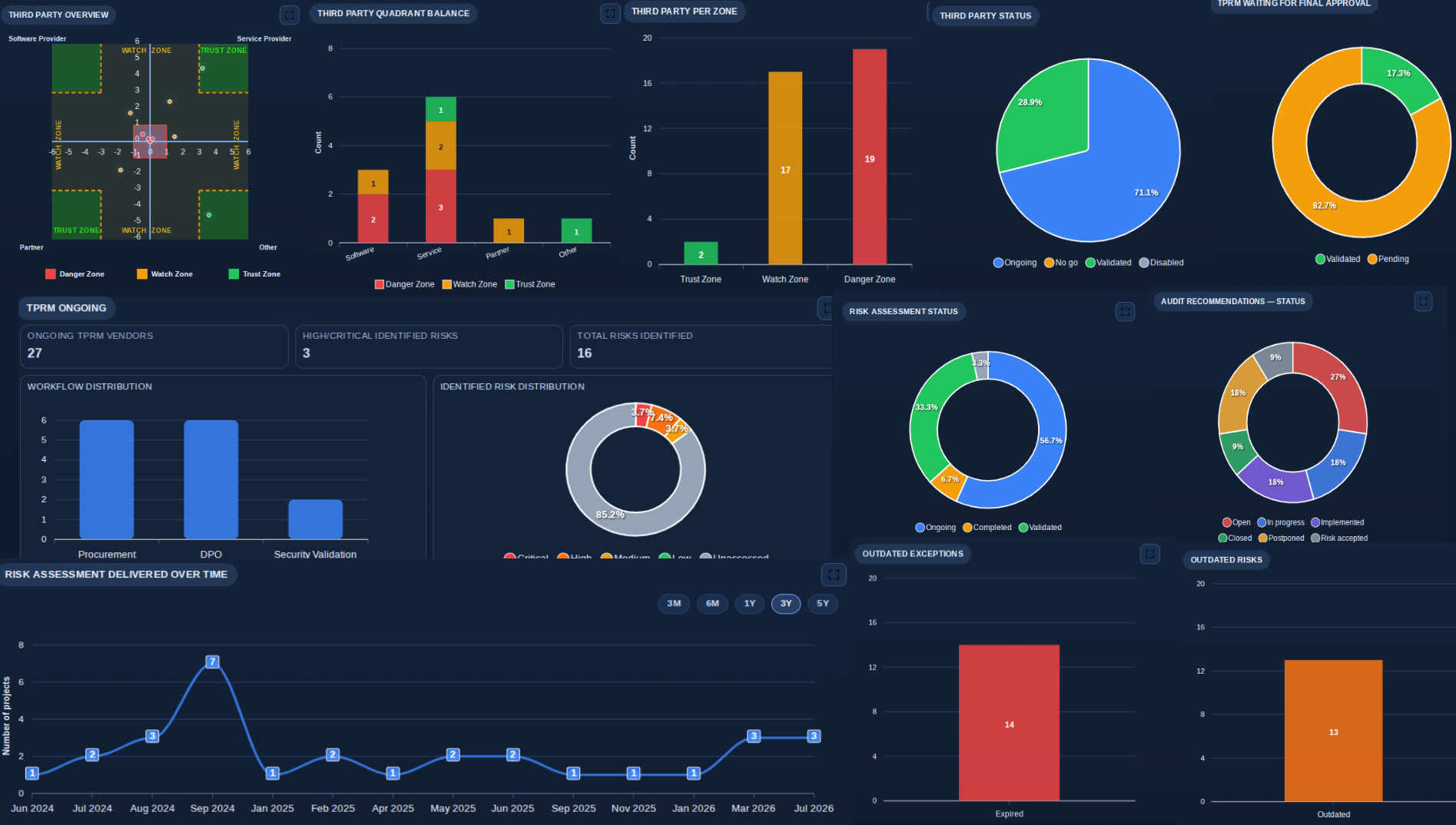
- One view. Every risk, asset, exception, finding and supplier lives in one data model. The 360° dashboard consolidates internal and third-party risk in real time, and committee packs are generated, not assembled.
- A memory. Every change is timestamped and attributed, and the history cannot be edited afterwards. A dedicated read-only auditor role sees the evidence directly, without anyone preparing a pack.
- Supplier oversight. Vendors are tiered by criticality, reassessed on schedule and chased automatically through the third-party portal. The vendors nobody has looked at in months are a filter, not a surprise.
- Alerts. Owners see their overdue risks, expiring exceptions and pending reviews in their task view, before the deadline turns into a finding.
The spreadsheet got your programme started, and that was the right call at the time. The register that survives an audit is a different tool.
In a 45-minute session we run your own scope through SynapseRM: requirements, findings, scored risks, register entry. You keep the output either way.

A Belgium-based provider of cybersecurity solutions, and the team behind SynapseRM / TPRM.